Le città di pianura
Reflections on the movie night organised by Elena Madiai, Dafni Riga
Title: Le città di pianura
100 min | Film | Italy | 2025
Directed by: Francesco Sossai
Producted by: Vivo film, Rai Cinema, Maze Pictures
Distributed by: Lucky Red
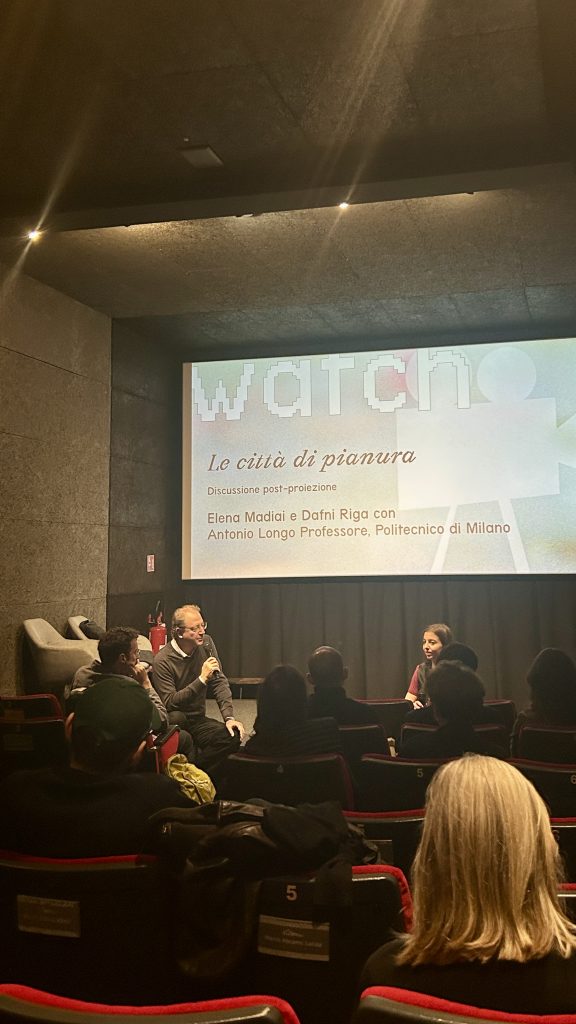
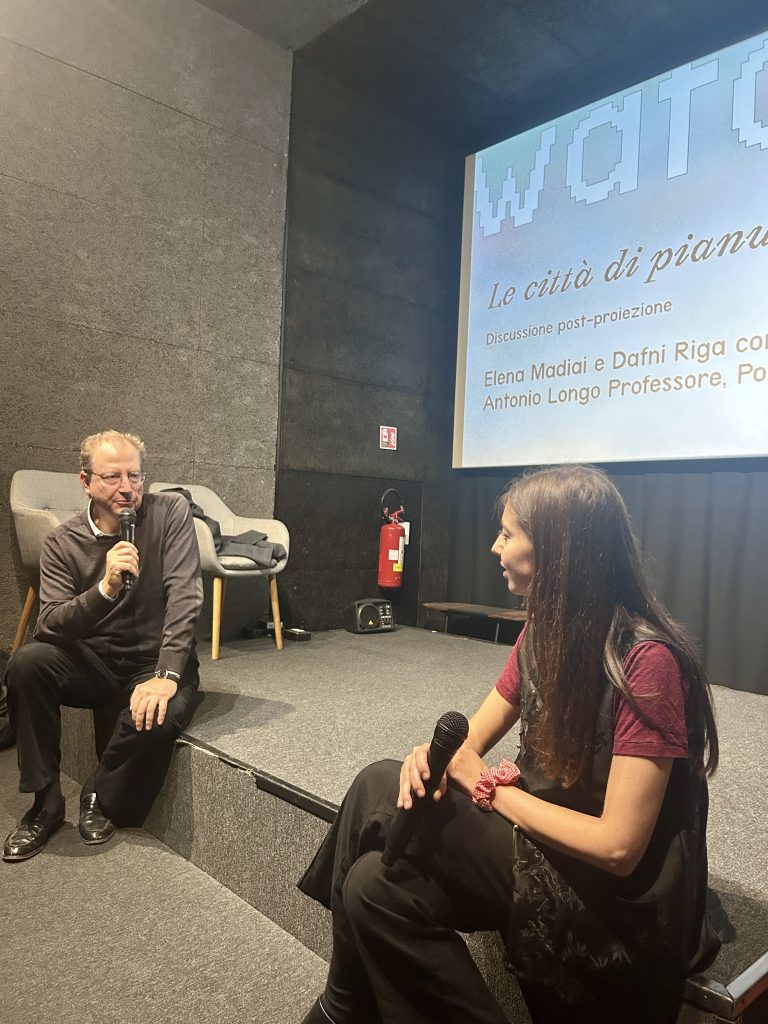
Post-screening discussion with:
Antonio Longo (Politecnico di Milano)
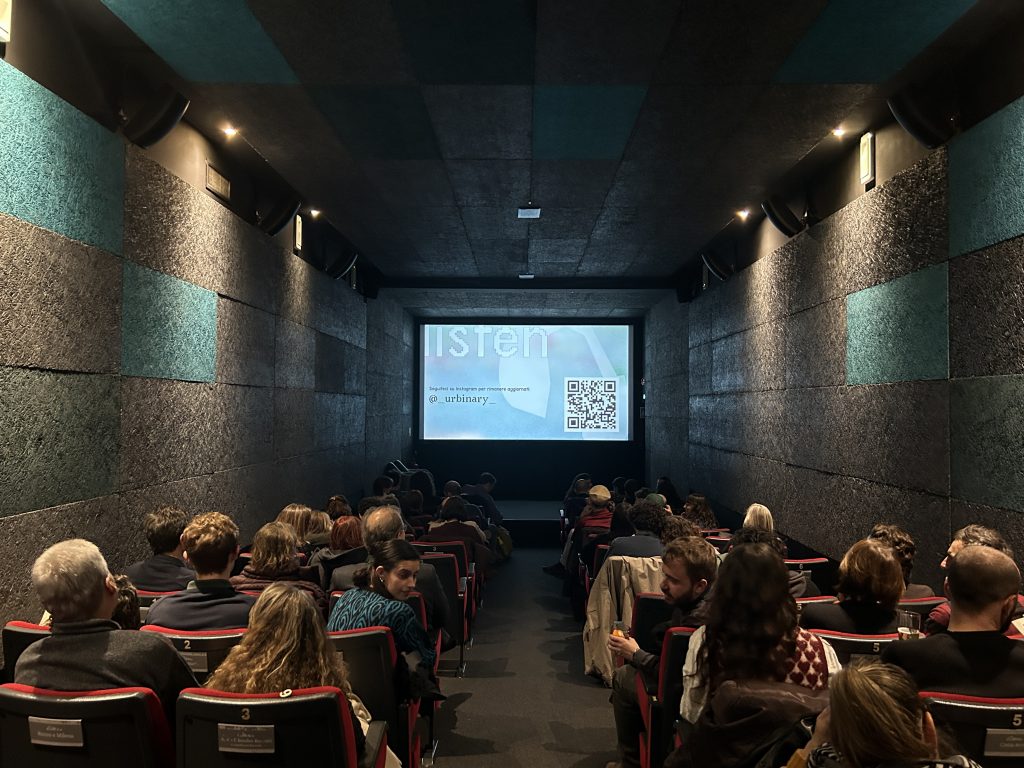
As part of Urbinary’s ongoing exploration of the relationships between territory, social conditions, and urban imaginaries, we dedicated a session to the movie Le città di pianura. This film — a bleak, poetic road movie set in the vast Veneto plain — invites us to reflect on how space, memory, and identity intertwine within landscapes that appear ordinary, even anonymous: roadside bars, scattered houses, empty fields, small towns stretched thin between past and present. In these “cities of the plain,” the film reveals a territory marked by forms of quiet collapse, existential drift, and a profound sense of suspension.
The story follows two middle-aged men adrift in a nocturnal, repetitive journey through the countryside. Their wandering unfolds along marginal roads and half-lit bars, punctuated by alcohol, silence, and unspoken loss. The arrival of a young architecture student introduces a counterpoint: a gaze that is curious, hopeful, capable of questioning what has long been taken for granted. Through him, the film opens a space for thinking critically not only about personal trajectories, but about the territorial condition itself.
Le città di pianura portrays a landscape that is no longer rural yet not fully urban — an in-between territory shaped by decades of industrialization, infrastructural sprawl, and cultural dislocation. Farms turned into warehouses, villages emptied of social life, fragments of countryside squeezed between roundabouts and logistics hubs: everything reflects a region caught in a slow process of erosion, both material and symbolic.
During the screening and discussion, we examined several key lenses that resonate with the film:
- Territorial decline — the fading of the idea of “home” and “living land,” replaced by a landscape of abandonment, dispersion, and exhaustion.
- Existential drift — lives suspended, mirroring the suspended space of the plains themselves: vast, flat, and stripped of a sense of future.
- Spatial memory and forgetting — the loss not only of places, but of the stories and forms of community once rooted in them; a process where erasure becomes invisible.
- Critique of urbanization and speculation — the transformation of land into commodity, where technical language (efficiency, development, logistics) masks the depletion of social and ecological worlds.
From an urban and territorial perspective, what emerges is a reminder that space is never neutral. The Veneto plain — like so many “peripheral” or “marginal” areas across Italy — becomes a site where political decisions, economic pressures, and cultural transformations solidify into landscapes of disconnection and quiet despair. Yet these same landscapes also hold potential: sites where new forms of community, belonging, and territorial imagination could emerge.
Through Le città di pianura, we explored how cinema can function as a form of territorial inquiry — a way of reading landscapes that reveals what planning documents, statistics, or policy language often obscure. The film urges us to ask:
What does it mean to live — and to plan — in places that feel suspended? What futures are possible for territories that seem forgotten, yet remain full of unspoken histories and latent possibilities?
As Urbinary, we believe in the responsibility of planners, urbanists, and territorial thinkers to confront these questions. Cinema, as this event showed, can be more than a mirror: it can be a catalyst for critical awareness, collective reflection, and the reimagining of spaces that deserve more than resignation.
Trailer