Where Olive Trees Weep
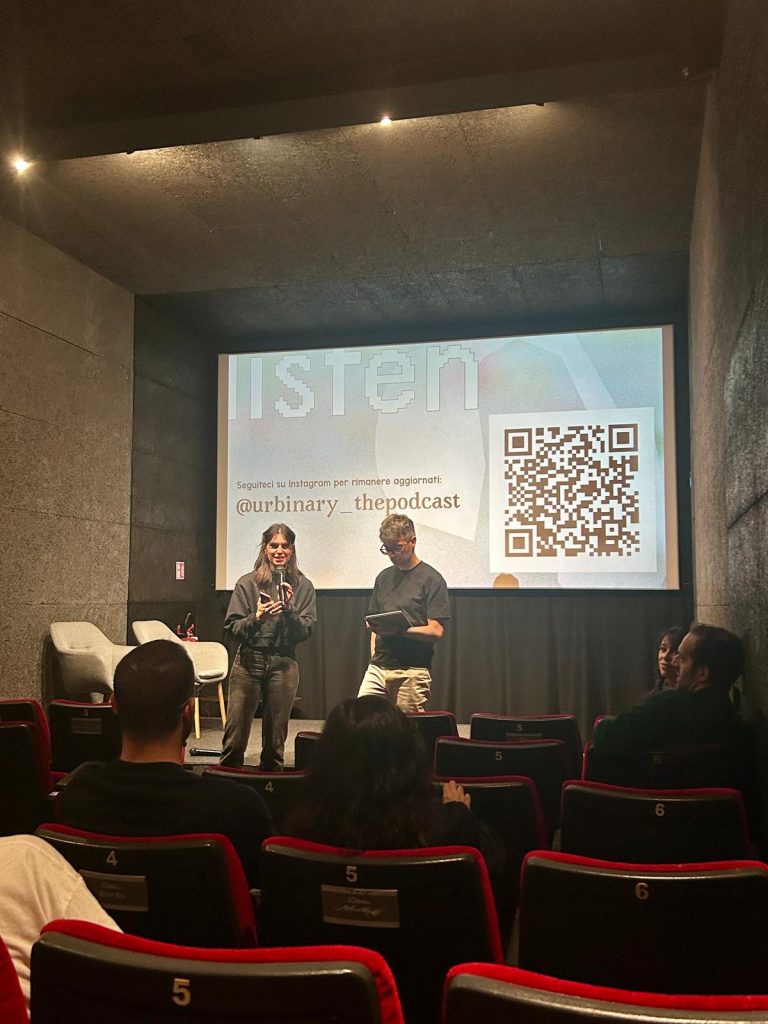
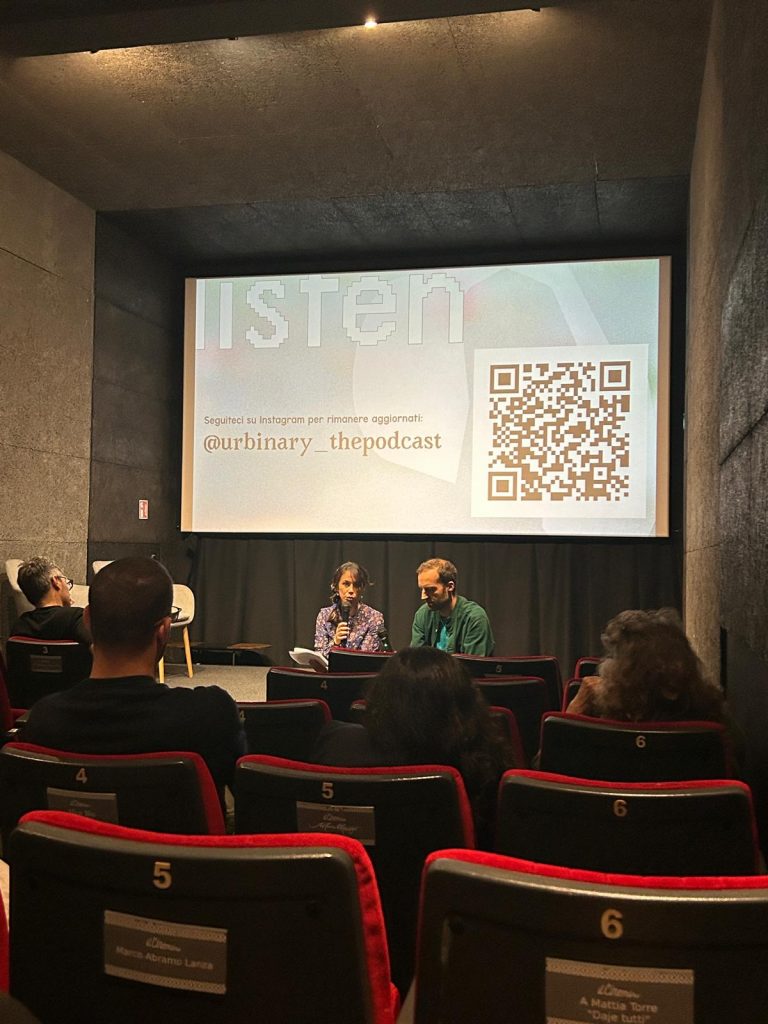
Reflections on the movie night organised by Giulia Oldani, Elena Madiai, Dafni Riga
Title: Where Olive Trees Weep
104 min | Documentary | Palestine | 2022
Directed by: Zaya Benazzo and Maurizio Benazzo
Producted by: Zaya Benazzo, Maurizio Benazzo and Ashira Darwish
Distributed by: Science & Nonduality
Pre-screening discussion with:
Francesco Chiodelli (Università degli Studi di Torino)
Maryam Karimi (Politecnico di Milano)
As part of the third cycle of the Urbinary podcast—dedicated to exploring the complex relationship between violence and urban space—we hosted a screening of the documentary Where Olive Trees Weep. This deeply moving film sheds light on how space, in its most intimate and territorial dimensions, can become the stage for systematic oppression and colonial domination. Few places in the world illustrate this more clearly than Palestine, where the urban landscape is planned and shaped through structural violence, the result of decades of Israeli occupation.
Through the voices and lived experiences of Ashira Darwish, Ahed Tamimi, and other Palestinians, the film touches on themes of intergenerational trauma, resistance, and the struggle for justice. Interwoven with the work of Dr. Gabor Maté—who offers trauma healing for women tortured in Israeli prisons—the documentary does not simply recount suffering; it invites us into the dignity of resilience, and the urgency of collective memory.
The screening was anticipated by a discussion with two invited guests: Francesco Chiodelli, professor at the University of Turin, and Maryam Karimi, researcher at Politecnico di Milano. Chiodelli described the reality in Palestine as one of carsic violence—a violence that is constant, structural, and often invisible, yet occasionally erupts in brutal and spectacular forms, such as the ongoing genocide in Gaza. Karimi offered a powerful lens on spatial violence, introducing concepts such as:
Domicide: the deliberate destruction of homes to erase personal and collective identities.
Spaciocide: the systematic fragmentation or denial of access to space, aimed at dismantling a people’s spatial continuity and sense of belonging.
Urbicide: the targeted destruction of urban environments and infrastructures to disrupt civilian life and community resilience.
From an urban planning perspective, what emerges is a disturbing yet revealing entanglement between technical rationality and political intent. As Chiodelli (2012) writes, “A plan is not merely a product of technical rationality, but fundamentally the expression of a political project.” In the case of Palestine, the Israeli state implements spatial interventions under the guise of technical measures—often invoking security—which in turn serve political objectives of dispossession and control. Private Palestinian land is frequently declared public for “security reasons”, only to be transferred to settlers who build illegal settlements. Planning becomes a tool of domination.
This is precisely what planning theorist Luigi Mazza (2004) warned of, when he described urban plans as multi-layered constructs—where regulation, social vision, political negotiation, and even the framing of the problem itself are all entangled. In Palestine, every layer is mobilized in service of a colonial logic.
Through the lens of Where Olive Trees Weep, and with the help of our guests, we explored how the occupation materializes in the built environment. The film reminds us that space is never neutral—it can be a tool of exclusion or a terrain of resistance.
As Urbinary, we believe in the political responsibility of urbanists and planners to recognize and challenge these dynamics. Cinema, as this event showed, can serve not only as a mirror, but also as a spark for change—moving us beyond mere awareness toward collective responsibility and action.
Trailer