
Of Land Tenure and Local Food Systems
Published in December 2025
In my recently completed doctoral dissertation on European metropolitan food systems, agricultural land tenure consistently emerged as a key factor hindering farmers’ transitions toward more sustainable farming practices. Many farmers argued that the conditions imposed by landowners are often unfavorable, particularly given that diversifying production or economic activities—and especially transitioning to organic or agroecological farming methods—requires time and substantial financial investment. As defined by the Food and Agriculture Organization (FAO, 2002), “land tenure systems determine who can use what resources for how long, and under what conditions.” Before further examining the importance of land tenure and the dynamics that shape it, it is important to underline that farmland ownership is highly complex. Its dynamics differ fundamentally from those of urban land and are deeply rooted in the historical specificities of each context. Consequently, undertaking research focused on land ownership requires an approach that accounts for multiple intertwining factors, some of which will be discussed in greater depth below.

Before doing so, it is also relevant to define ‘food systems’ as relational networks encompassing food production, processing, distribution, and consumption, and involving four key components: farmers, consumers, communities, and the environment (Enthoven & Van den Broeck, 2021). The term local preceding food system refers to networks that favor spatial proximity between production and consumption. However, it also implies support for forms of production grounded in social and environmental values. These values seek to counter the dominant model of food production and consumption that emerged in the second half of the twentieth century, characterized by industrialization, intensification, productivity and orientation toward mass consumption (Marsden, 1999). Consequently, transitioning away from this model requires not only supporting small-scale farmers but also re-establishing relationships between cities and their hinterlands.
Western cultural perception of property and the loss of the commons
As historically documented by authors such as Emilio Sereni (1961) and, more recently, Álvaro Sevilla-Buitrago (2022), land tenure regimes are intrinsically linked to specific agrarian territories. They reflect social structures, power relations, and governance models, and collectively shape the ways in which landscapes are produced and inhabited. Sereni’s seminal work extensively traces how the Italian agrarian landscape has been shaped over centuries by shifting power dynamics and territorial configurations, particularly through farming practices and the cultural relationships between food production and consumption. His analysis offers a stratified understanding of the landscape while also anticipating a paradigmatic shift in the values of an emerging modern society.
Álvaro Sevilla-Buitrago’s book, Against the Commons: A Radical History of Urban Planning, introduces a series of case studies that demonstrate how capitalist-oriented societies have culturally redefined Western social organization and destabilized collective ways of living. The first case, situated in pre-industrial England, examines the eighteenth-century Enclosure Acts, which privatized land previously farmed and inhabited by commoners, strategically forcing families to abandon collective forms of inhabitation and either remain in the countryside under restrictive farm labor arrangements or migrate to cities to engage in waged industrial work. Sevilla-Buitrago exemplifies how planning both defined property and functioned as a tool of primitive accumulation and capitalist expansion, creating the conditions for a cultural paradigm shift in the relationship between land, labor, society, and collectivity.
Other authors, such as Calo et al. (2021) and Reyna (2024), similarly argue that conceptions of private property within capitalist economies, together with dynamics of land concentration, hinder small-scale farmers’ ability to move away from models that favor industrial production and mass consumption. This conception of ownership, as argued by Reyna (2024), frames land ownership as the “basis of freedom and economic prosperity,” granting the owner not only the right to determine the use of the land but also to exclude others from accessing the property. This argument clearly echoes the principles articulated by John Locke in his Two Treatises of Government (1689), a foundational text in the liberal conception of private property and individual rights.
Pre-industrial and industrial land ownership structure
The English case discussed by Sevilla-Buitrago clearly illustrates how power dynamics were profoundly altered by the shift from an agrarian to an industrial economy, in which agricultural labor began to be perceived as undignified. This perception was further reinforced by the geographical displacement of food production to overseas territories, particularly those where labor and land were controlled through colonization campaigns, while simultaneously creating space for the rise of new industries on European soil.
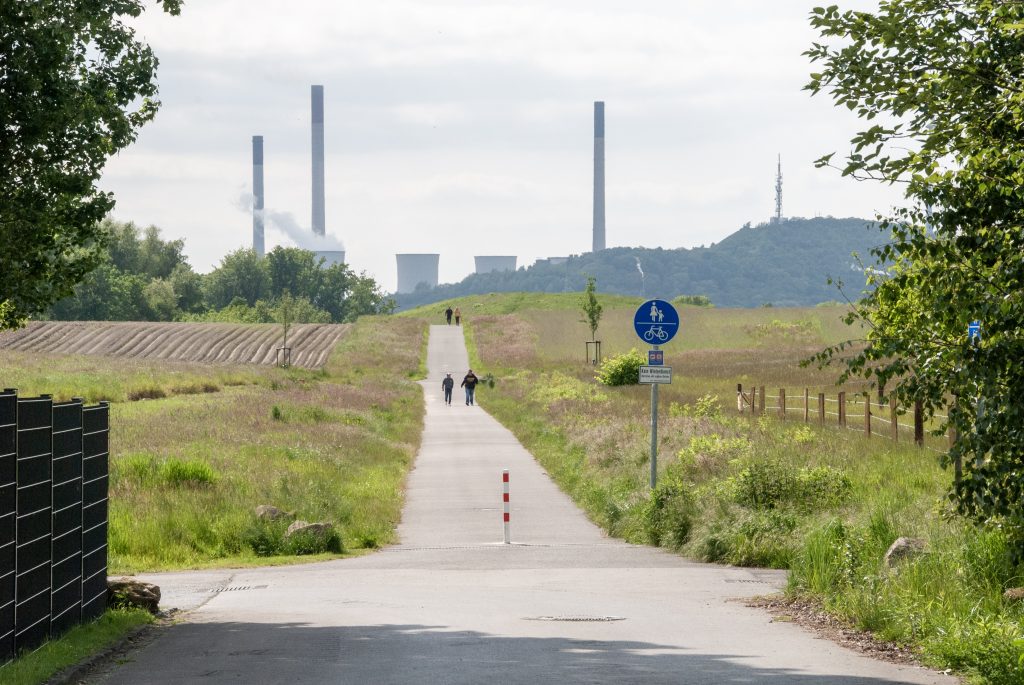
For example, in the polycentric area known as the Ruhr Metropolis in Germany, nowadays major farmland and undeveloped landowners include former mining companies. This region has been historically renowned for the extraction of natural resources, primarily coal, from the nineteenth century for steel and energy production. From the 1960s and 1970s, production began to decline due to rising overseas competition and, later, as part of energy transition policies. Although coal extraction has ceased, former mining companies remain among the principal landowners. Another significant landowner is the institution Regionalverband Ruhr (RVR, Ruhr Regional Association), which originated as a territorial entity in 1920, associating municipalities and districts involved in the coal economy. Over time, it evolved into an organization with planning, governance, and territorial management responsibilities. Agricultural activity, particularly food production, lost prominence during industrialization, with remaining agricultural production increasingly oriented toward energy and commodity outputs.
RVR is a public institution that owns approximately 18,000 hectares of natural areas, of which 1,200 hectares are farmland. In recent years, RVR has acquired natural land for conservation and ecological compensation purposes (Bottmeyer et al., 2011). However, farmland has largely been treated as a reserve for future needs, and until 2024, RVR maintained a one-year contract policy for its farmer tenants, severely limiting their ability to invest in sustainable farming models.
Another major landowner is the former mining company RAG Industries, which owns approximately 12,000 hectares of land (RAG, 2012). RAG has diversified its operations to include a real estate and development branch, RAG Montan. Some of their former industrial sites are now experimenting with new land-use typologies that integrate farming and biomass production into real estate development. One notable example is Hassel District Park, developed on the site of the former Hassel Coking Plant, which includes thirty hectares of farmland leased to an organic farmer within the limits of the public park.
A society founded on suburbanization
Recent debates in urban and territorial studies build on the Lefebvrian approach to urbanization, later expanded by Brenner (2013) and other critical urbanism scholars, to explore it through counter-narratives such as “plural planetary geographies” (Wang et al., 2023), “ruralization” (Gillen et al., 2022; Krause, 2013), and “suburbanization” (Keil, 2018) These approaches frame the same theoretical questions from different perspectives, revealing how the agrarian question is embedded within global processes and how urban and agrarian spaces are co-constituted through daily actions and practices. As argued by Keil (2018), recognizing that these contemporary phenomena are rooted in a suburbanized society exposes diverse political, social, infrastructural, and ecological dimensions.
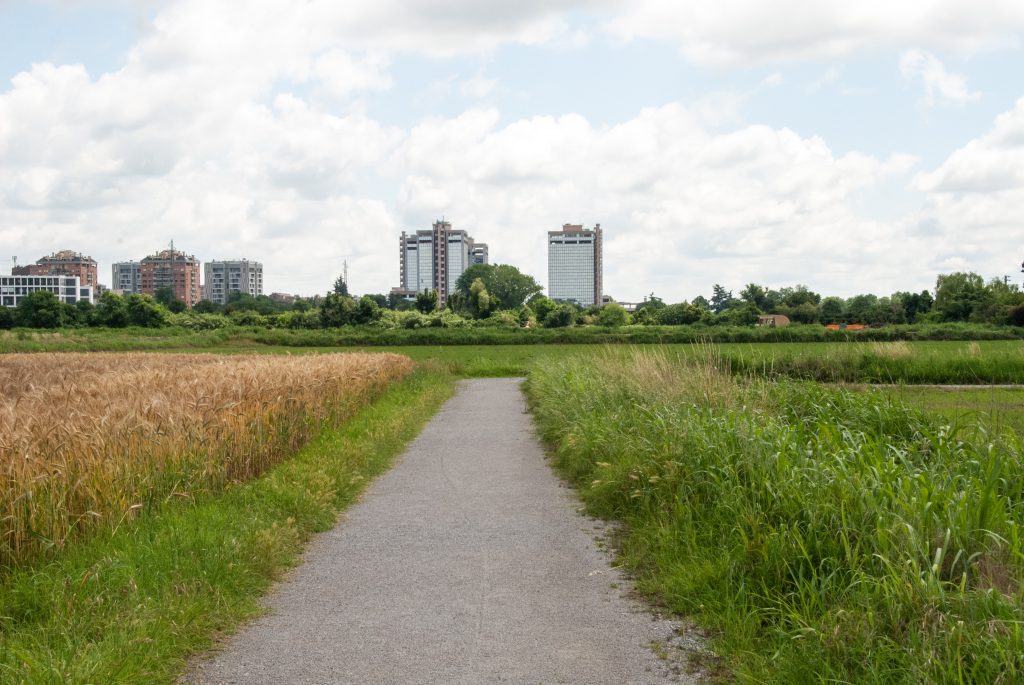
This relational framework can be exemplified through a case in Milan, where the Falappi family, tenants of Cascina Campazzo—a 17th-century farm owned by the noble Foppa family—resisted eviction in the 1980s and 1990s. The farm and its surrounding land, together with hundreds of hectares nearby, had been purchased by the Ligresti family, a financial and real estate group. This acquisition occurred as municipal planning authorities favored the city’s southward expansion, predominantly over agricultural land. Balducci and Piazza’s (1981) book, Dal parco sud al cemento armato: Politica urbanistica e strategie immobiliari nell’area Milanese, describes Milan’s southern periphery as a site of contestation and contradiction between urban growth and the protection of agricultural land. From 1989 until 2015, the Falappi family, together with a committee of local residents, advocated for the protection of this area and its transformation into the Ticinello Urban Agricultural Park.
Conflicts over Cascina Campazzo involved Milan’s Municipality, landowners, politicians, and citizens’ groups for more than a decade. Despite ongoing disputes and legal battles, the tenant farmers continued their agricultural activities while negotiations with the Ligresti group proceeded. The Court of Cassation approved the farmers’ eviction in 2008, and by 2011 the Municipality gained temporary access through a five-year loan. Expropriation began in 2014, with park construction commencing in 2015. During this period, the Ligresti group faced multiple corruption scandals linked to urban development projects.
This case is not isolated. Other examples in Milan’s peri-urban countryside demonstrate that emerging neo-agricultural models and initiatives are attempting to establish themselves but continue to be constrained by landownership dynamics inherited from outdated urban development models (Salvador, 2025); at least outdated from the perspective of a socio-ecological transition of communities and territories.
A transition with new variables
This brief excursus of cases and topics has hopefully highlighted the relevance of examining land ownership within the paradigm of socio-ecological transition. In the example discussed, this inquiry focuses on food production and consumption, specifically local food systems. However, this discourse is not limited to this topic alone, it is equally relevant to broader issues involving access to basic resources—such as energy, food, and water—and the protection of natural environments and biodiversity. Investigating land ownership also opens the possibility of rethinking models that promote collective and communal approaches, incorporating the variables of equity and justice within the context of the climate emergency (Kaika et al., 2023). It also reveals power dynamics deeply rooted in history, as well as often overlooked institutional landowners—many of which are public entities—that could play a pivotal role in actively shaping strategies.
