Pasturismo
Reflections on the movie night organised by Giulia Oldani, Elena Madiai, Dafni Riga
Title: Pasturismo
43 min | Documentary | Italian | 2024 (Italy)
A film by Andrea Chiloiro, Riccardo Franchini, Giovanni Labriola, Matteo Ragno
Directed by: Boschilla
Producted by: Boschilla
Distributed by: OpenDdb
Contribution in the discussion: Elena Madiai
Agricultural fields, mountain dams, villages overtaken by tourism. These are not peripheral spaces—they are frontiers of transformation, sites where global pressures reshape local realities. As part of our second thematic cycle, we turn our attention to these in-between geographies, often dismissed as static or marginal, yet pulsing with conflict and change.
Three episodes, three territories, three forms of urban transformation:
- Illegal recruitment in the ghettos of southern Italy;
- Hydro-extractivism in dam-scarred mountain valleys;
- Tourism as a soft-colonial mega-event in rural highlands.
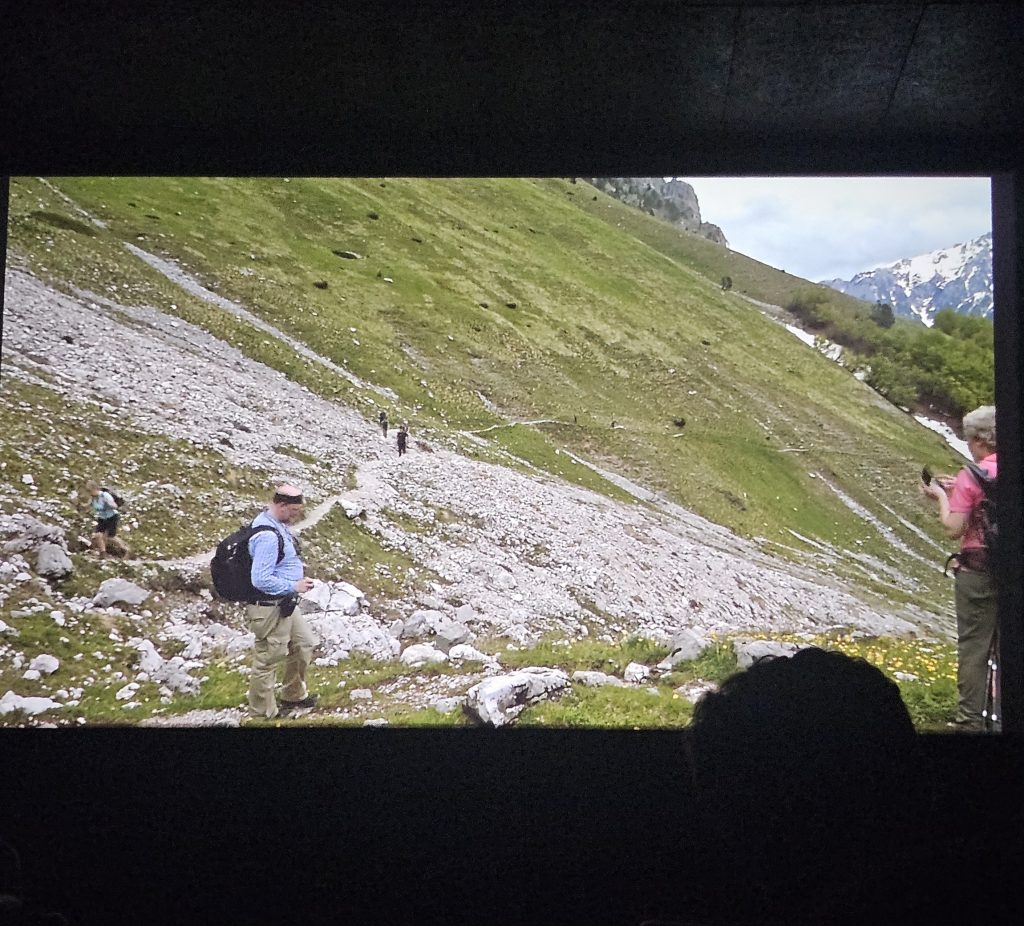
Our third screening, Pasturismo, focuses on the latter: a story set in the northern mountains of Albania, along the Peaks of the Balkans trail, where a traditional pastoral economy meets the demands of global tourism. Produced by the Italian collective Boschilla, the documentary follows Bylbyl, a shepherd who, like many in the Dobërdoll valley, sees tourism as a potential alternative to emigration. Guesthouses rise beside sheep pens, and the call for “authenticity” rebrands old practices into saleable experiences.
But with every hiker comes a question: Can tourism sustain a territory, or will it simply consume it?
Through the voice of Erwin Lanj, a local environmental guide, the film presents the contradictions of this new economy: its promises of income, its risks of commodification, its power to reshape landscapes and identities. The valleys, once considered peripheral, now play host to an influx of European visitors seeking a “lost” rurality—wild, untouched, and frozen in time. But the presence of the tourist inevitably transforms what it seeks to preserve.
Pasturismo is a meditation on a global phenomenon playing out in the quietest of places. It challenges the comforting narrative that slow or rural tourism is inherently benign. As the collective asks: What happens when tourism becomes the only alternative to disappearance? And what role can media—documentaries, podcasts, or public scholarship—play in telling these stories without flattening them?
This screening invites us to reflect not only on the futures of the Balkans’ mountain valleys, but on the fate of all so-called “non-cities” becoming sites of transformation. Whether through labor exploitation, environmental extraction, or the fantasy of “authentic” escape, the edges of the urban world are no longer edges at all.
As a consequence, the discussion following the screening was particularly engaged. Audience members shared their experiences both as travelers in Albania and as (former) inhabitants of Italy’s marginal or internal areas. In the first case, they reflected on the visible and often problematic effects of mass tourism in remote regions. In the second, powerful emotions emerged around coming from places perceived as having no future. These testimonies highlighted the impact of growing social and economic inequalities, further exacerbated by environmental degradation and climate change. In both contexts, the need for a more just and equitable development model was widely acknowledged—but remains largely unmet.
The audience also drew parallels with urban life, noting how cities—once seen as centers of opportunity—are increasingly driving people away while failing to support the most vulnerable, who are left behind in under-resourced conditions with inadequate social services and welfare systems. Lastly, a thought-provoking reflection emerged around the role of privileged Western actors in imposing development paradigms on more fragile populations. This prompted a critical question: Do we have the right to judge those who are simply trying to escape poverty?
The discussion concluded with many questions still unanswered, yet it proved to be deeply enriching.
Trailer