One Day One Day
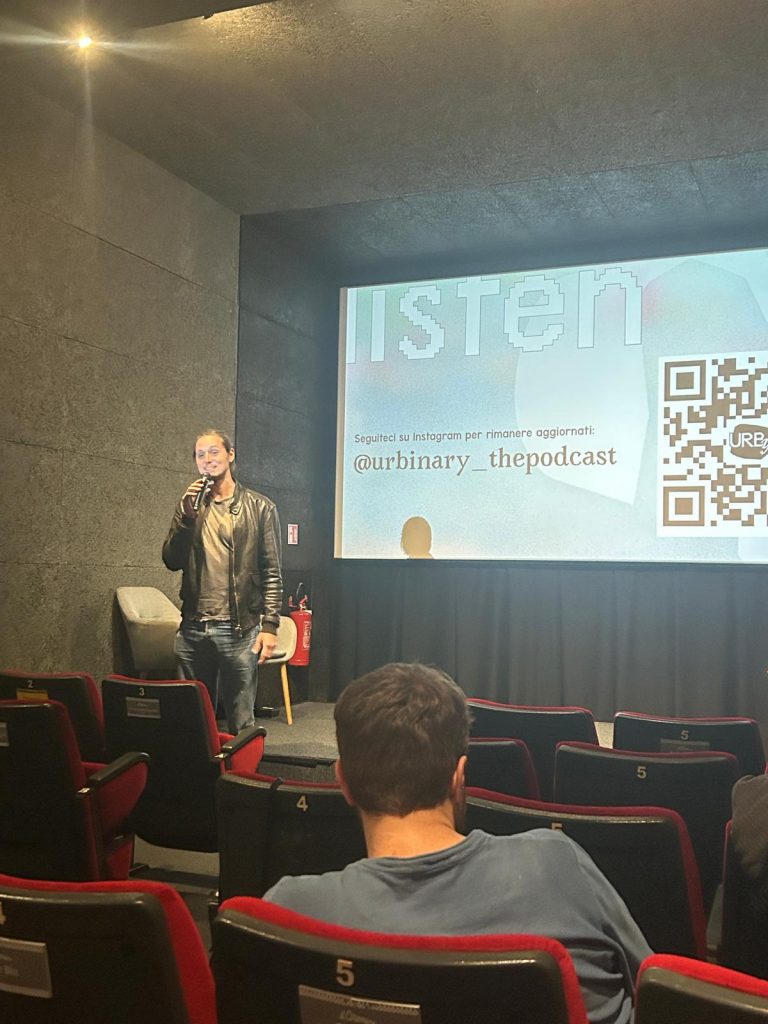
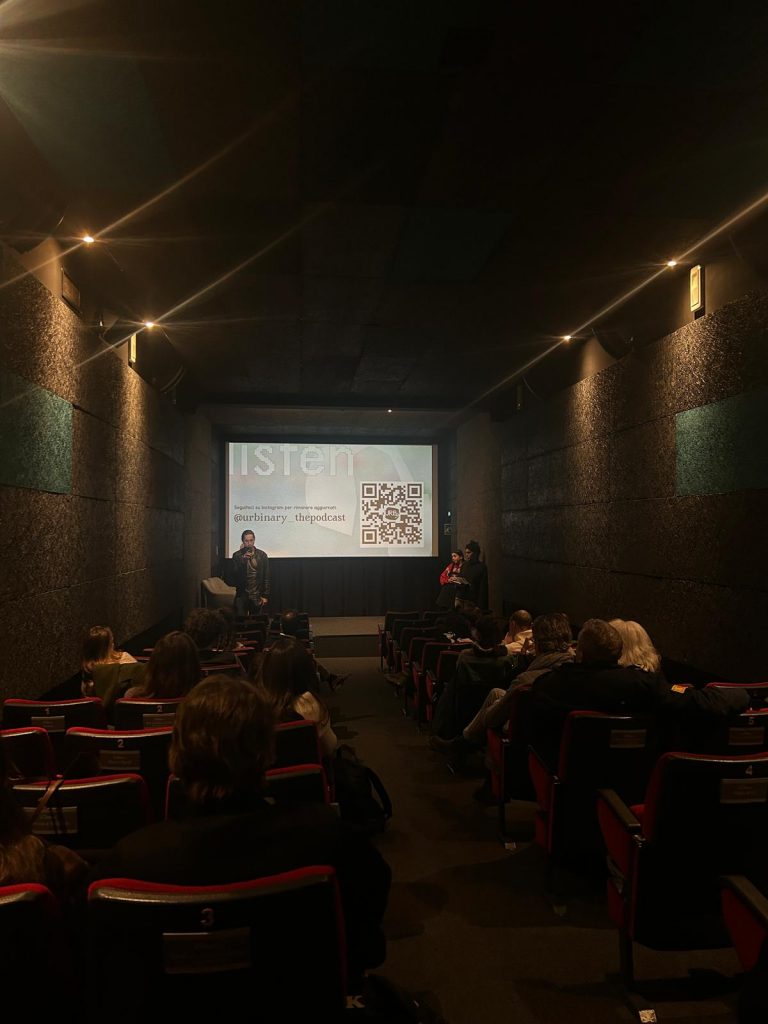
Reflections on the movie night organised by Giulia Oldani, Elena Madiai, Mohamed Elgohary, Dafni Riga, Yorgos Chatziefthymiou
Title: One Day One Day
78 min | Documentary | English | 2021 (Italy)
Directed by: Olmo Parenti and Marco Zannoni
Written by: Olmo Parenti, Matteo Keffer
Produced by: Marco Zannoni, Giacomo Ostini, Alessandro Tommasi
Distributed by: A Thing By
Post-screening discussion with:
Olmo Parenti (Film Director, A Thing By)
As an introduction to Cycle Two, which seeks to deconstruct the assumptions of “non-urbanity” and answer a specific question: what is the nature of non-cities? The third screening featured the documentary One Day One Day, produced by the young collective A Thing By with the support of Will Media.
The documentary tells the story of over 500,000 immigrants living without documents and in extremely precarious conditions. Many of them seek refuge and work in the countryside, where they are employed to harvest the food we buy in supermarkets. It presents the stories of these people from inside the ghettos and shantytowns scattered across northern Puglia.
It tells the stories of those who say, “I am at Italy, not in Italy,” showing the difference between integration and inclusion. However, even if they are not included, these people are still grateful to Italy. They are even grateful to their caporali, their exploiters. As Olmo, our guest, told us:
“Their exploiters are often the only Italians they interact with, and they even develop a kind of affection for them. There was a young man who lived in his car for a year and a half, and his WhatsApp profile picture was of the farm owner who used to call him for work and sign his contract.”
What interests us, as urban scholars, is understanding (and this is visible in the documentary) how the concept of rural is changing, how its role is evolving. The film highlights the existence of another rurality—one that contains these people and their shantytowns. These informal settlements, far from being typical in Western landscapes, are treated as temporary, yet they are becoming increasingly permanent. More importantly, they are being made permanent, as in the end, for the state, it is often more convenient to keep these people there rather than work to include them.
Since Urbinary shares a goal with A Thing By, which was represented on this occasion by Olmo, we asked ourselves how documentaries (in their case) and podcasts (in ours) can serve as tools for social struggle—or perhaps simply as a bridge between what is studied, what is experienced, and what is told. Olmo told us that he hopes documentaries, podcasts, or other media can be just a starting point to get an idea of a topic. However, he also highlighted something that has become even more relevant in recent months:
“We have little energy, and we know everything only superficially. I believe we need a small revolution within ourselves—to relearn how to make an effort to understand things, to realize that making an effort leads to gratifying results, and, at that point, to return to being thinking beings. The world today makes it hard to think. Everything is designed to prevent you from thinking, from making an effort. We have eliminated effort from our lives, and we need to become aware of that.“
So, this time, the screening—besides being a potential tool to explain a complex phenomenon like Caporalato—was also a moment to reflect. After watching a documentary (or even a movie!) or listening to a podcast, we should stop, think, and perhaps go further.
Trailer